Mastering the Basics: What is Gassed and Mercerized Cotton Yarn?
Introduction
In the textile industry, cotton is often called the “King of Fibers.” However, not all cotton is created equal. If you’ve ever handled a high-end Polo shirt or luxury embroidery thread and wondered why it has a silk-like sheen and incredible strength, the answer usually lies in two technical processes: Gassing and Mercerization.
In this guide, we’ll break down the science behind Gassed Mercerized Cotton and why it remains the gold standard for premium textile manufacturing.
1. The Raw Material: The Importance of Staple Length
Before any processing begins, the quality of the raw cotton is paramount. High-quality mercerized yarn typically requires Long-Staple Cotton (often sourced from Egypt or select regions in China).
- Why? Longer fibers (staples) provide more surface area for the mercerization process to take effect and result in a yarn that is naturally stronger and smoother even before it hits the machines.
2. Step 1: The Gassing Process (Singeing)

Most natural cotton yarn has a “fuzzy” surface caused by microscopic fiber ends sticking out. In the Gassing (or singeing) process, the yarn is passed through a high-speed gas flame at controlled speeds.
-
What it does: It burns off the surface lint and fuzz without damaging the core of the yarn.
-
The Benefit: This creates an incredibly “clean” and smooth surface. Without gassing, even a mercerized yarn will look “foggy” or dull due to the surface hairiness. It also virtually eliminates pilling in the finished fabric.
3. Step 2: The Mercerization Process
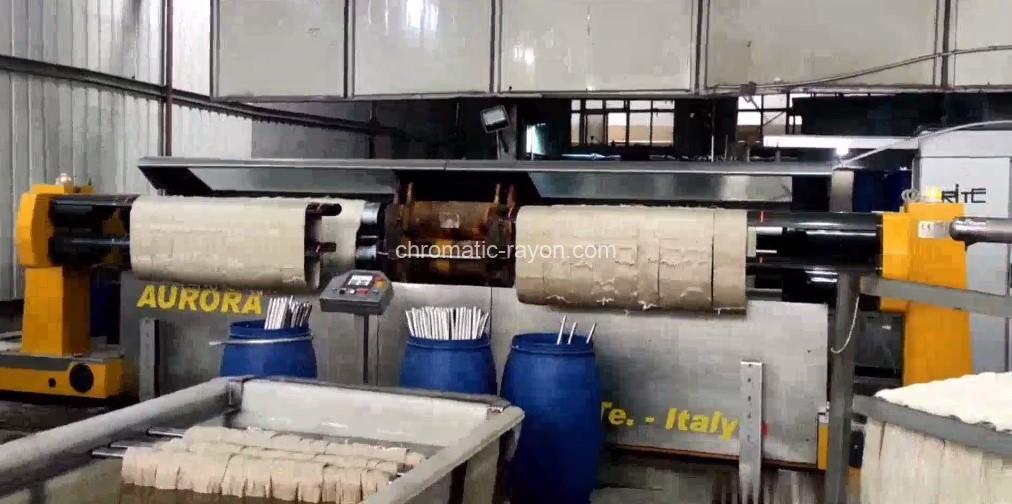
Developed in the 19th century by John Mercer, this process involves treating the cotton yarn under high tension in a cold bath of caustic soda.
What happens at the molecular level?
Standard cotton fibers are flat and ribbon-like. When mercerized under tension:
-
Fiber Swelling: The fibers swell and become cylindrical (round).
-
Luster: The rounded shape reflects light much more uniformly, creating a permanent, silk-like sheen.
-
Dye Affinity: The internal structure of the fiber opens up, allowing it to absorb up to 25% more dyestuff. This results in the vibrant, deep “chromatic” colors that premium brands demand.
4. Why Use Gassed Mercerized Cotton?
For textile buyers and designers, the combination of gassing and mercerizing solves three major pain points:
-
Color Brilliance: It achieves deeper blacks, brighter neons, and richer jewel tones that untreated cotton simply cannot match.
-
Dimensional Stability: The process “sets” the yarn, significantly reducing shrinkage and torque in knitted fabrics.
-
Tactile Elegance: It offers the “Silk Touch”—the cool, smooth, and breathable sensation of cotton with the aesthetic of luxury silk.
| Performance Metric | Standard Cotton Yarn | Gassed Mercerized Cotton (Shanghai Samsun) |
|---|---|---|
| Microscopic Surface | Fuzzy with protruding fiber ends (lint). | Ultra-smooth and clean (after gassing). |
| Visual Luster | Dull, matte, and natural finish. | Silk-like sheen with permanent reflection. |
| Pilling Resistance | Moderate to High (fuzz tangles into pills). | Superior (minimal pilling after repeated washes). |
| Tensile Strength | Baseline industry standard. | 20-30% Stronger (due to fiber swelling). |
| Dye Absorption | Standard saturation. | Deep & Vibrant (absorbs up to 25% more dye). |
| Dimensional Stability | Prone to shrinkage and torque. | High Stability (preshrunk during mercerization). |
| Hand-Feel | Soft but slightly “hairy” or rough. | Cool, crisp, and luxury “Silk-Touch.” |
| Best Used For | Fast fashion, basic innerwear, casuals. | Premium Polos, Couture, & High-end Hosiery. |
5. Common Applications
From the perspective of a fiber expert, Gassed Mercerized Cotton is the preferred choice for:
-
Luxury Knitwear: High-gauge Polo shirts and T-shirts.
-
Fine Hosiery: Durable, breathable socks with a sleek finish.
-
Embroidery & Lace: Where thread strength and light reflection are critical.
Conclusion: Choosing the Right Partner
Understanding the technical journey from fiber to yarn helps brands make informed sourcing decisions. While the process is complex, the result is a material that elevates the reputation of any fashion line.
At Shanghai Samsun, we have spent years perfecting the balance of flame-speed in gassing and tension-control in mercerization. Whether you are developing a new collection of luxury basics or high-performance embroidery threads, our technical team is here to help you find the perfect yarn count and color.
Explore Our Technical Range
Ready to see the “Silk-Touch” difference in person?
Applications (1) Company (1) Product insights (9) Yarn & Fiber Basics (2)